

PLAZA DE SORA
空の広場
A fired earthen space to play within and still be outside.
焼成した土の中で遊びながら、外を感じる空間。
YEAR / 制作年
2000
Removed in 2004 / 2004年撤去
LOCATION / 場所
Onizaki Yacht Harbor, Tokoname, Aichi, Japan
愛知県常滑市 鬼崎ヨットハーバー
FORMAT / 形式
Site-specific fired earthen public artwork
現地制作・焼成による土の公共作品
MATERIALS / 素材
Clay, fire, recycled wood
粘土、火、再利用木材
DIMENSIONS / サイズ
2 × 2 × 2 m
CLAY / 粘土
Approx. 3 tons / 約3トン
FIRING / 焼成
10-day wood firing using approximately 6 tons of recycled wood
約6トンの再利用木材を使用した10日間の薪焼成
PARTICIPANTS / 参加者
4
FUNDING / 制作費
80% sculptors’ symposium / 20% artists
彫刻シンポジウム 80% / アーティスト 20%
STATUS / 状況
Completed on-site and donated to Tokoname City; removed on June 30, 2004.
現地で完成後、常滑市へ寄贈。2004年6月30日撤去。
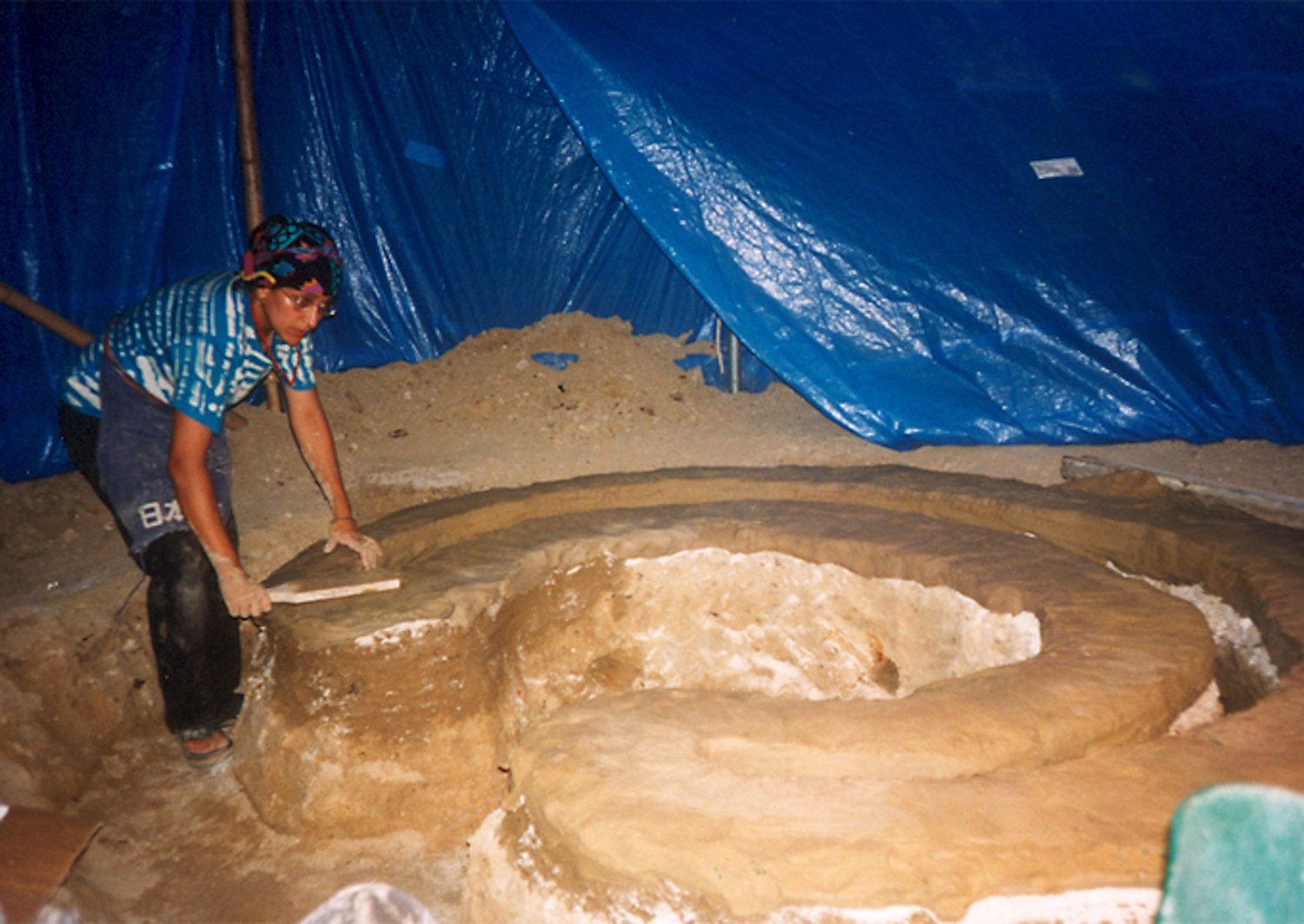
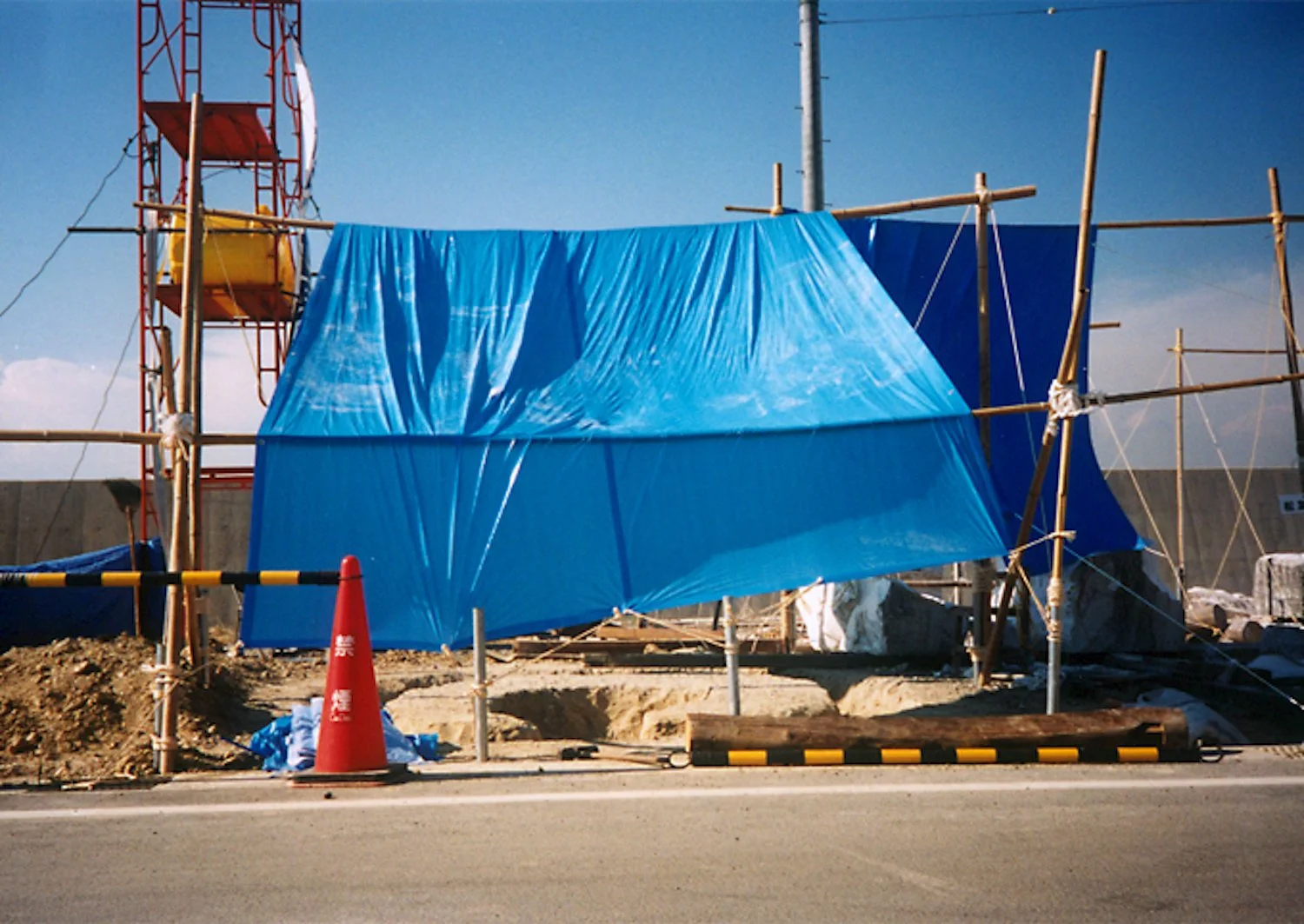
Plaza de Sora was created in 2000 at Onizaki Yacht Harbor in Tokoname, Aichi. Invited to participate in a sculptors’ symposium, Elgueda Ward Studio had one month to build, dry, and fire the work entirely on site.
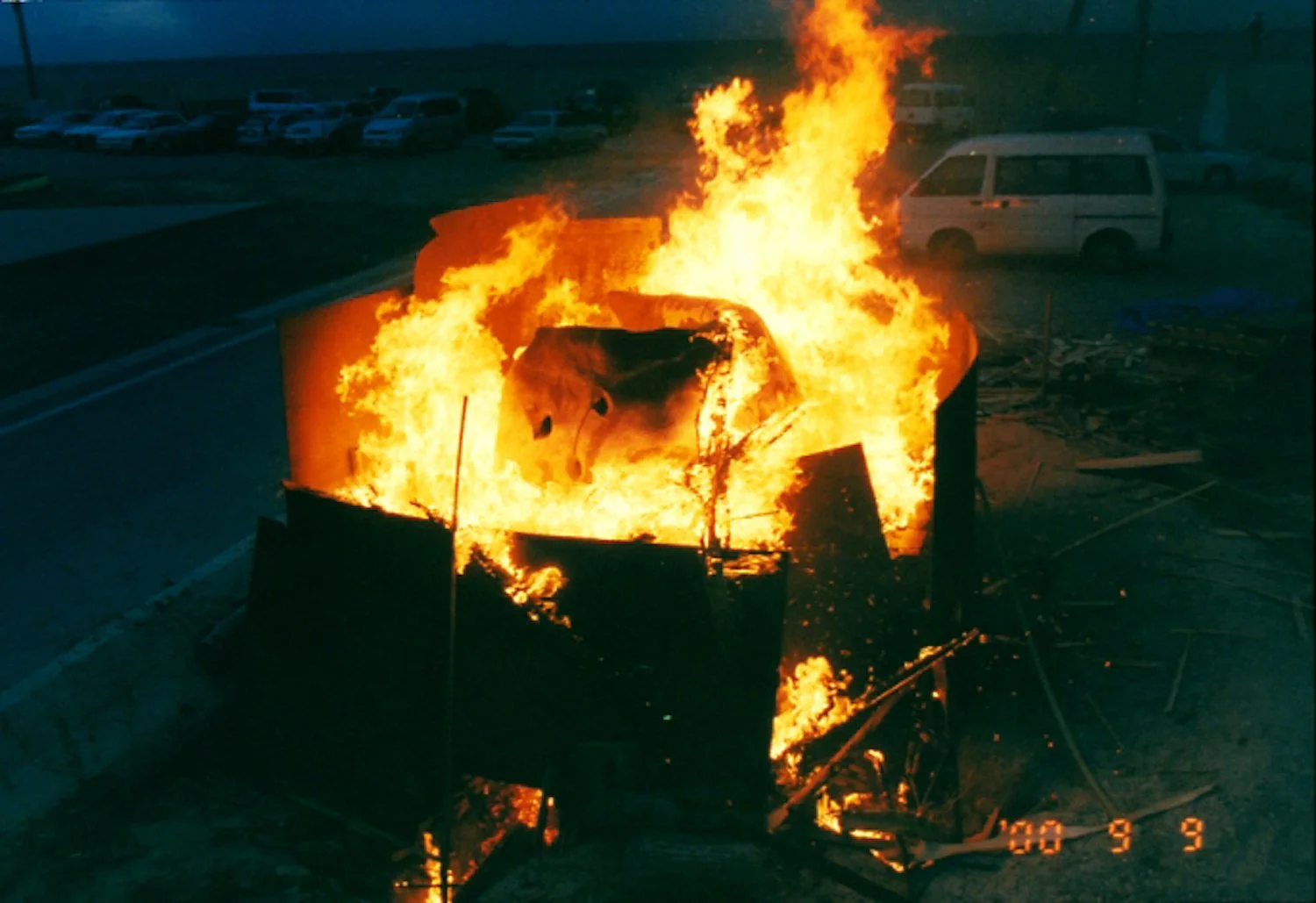
Over five nights, three tons of clay were compacted and formed into a two-meter cubic structure. The work was then fired for ten days using approximately six tons of recycled wood, transforming the raw earth into a permanent ceramic form.
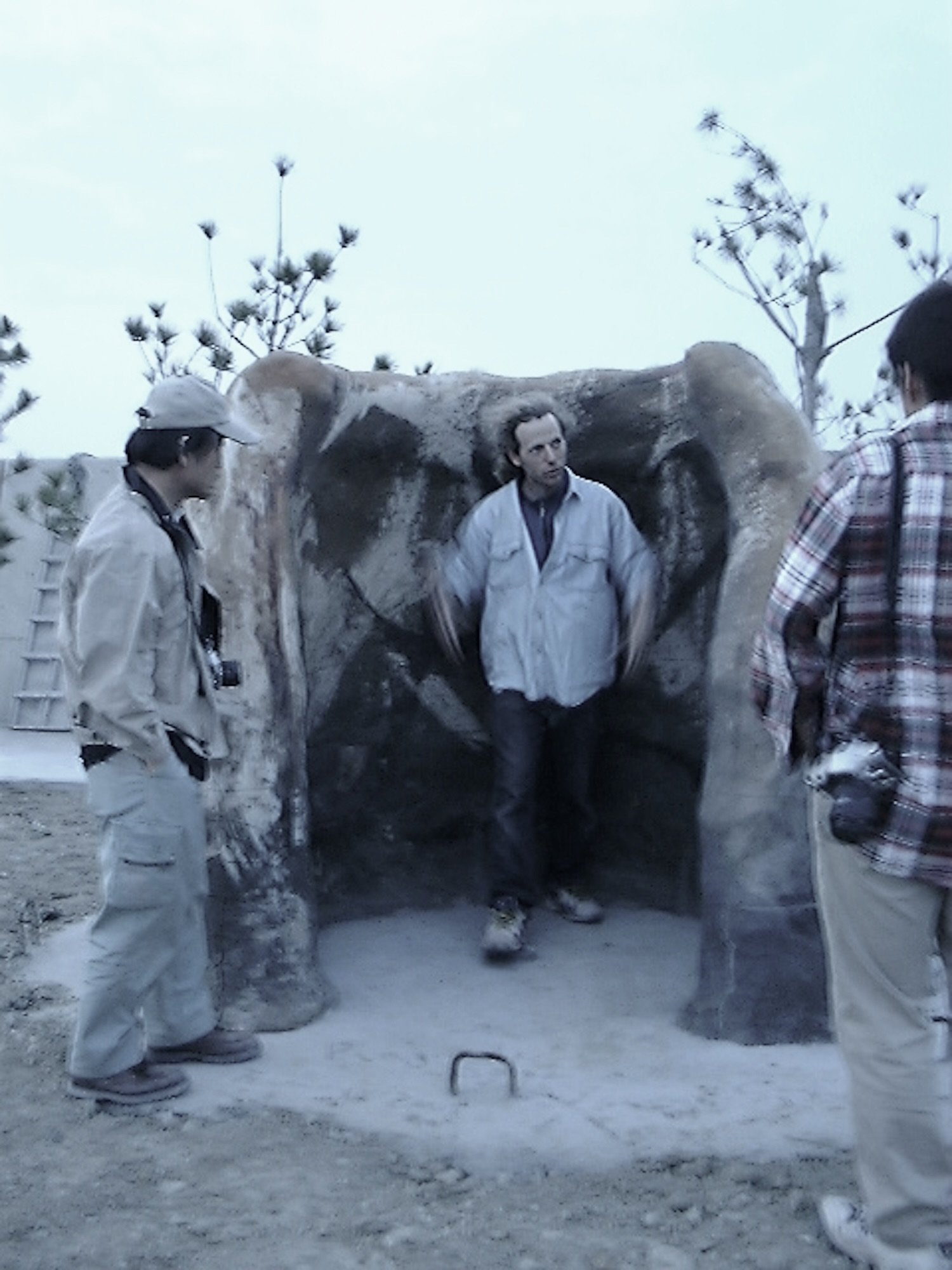
Conceived as “a fired earthen space to play within and still be outside,” the work moved ceramics beyond the scale of an object and toward a space that could be entered and physically experienced.
After firing, the completed work was moved by crane and donated to Tokoname City.
《空の広場》は、2000年に愛知県常滑市の鬼崎ヨットハーバーで制作されました。彫刻シンポジウムへの参加を機に、1か月という限られた期間の中で、制作、乾燥、焼成までをすべて現地で行いました。
5日間にわたって3トンの粘土を締め固めながら成形し、その後、約6トンの再利用木材を使って10日間焼成しました。
作品は、**「焼成した土の中で遊びながら、外を感じる空間」**として構想されました。見るための陶芸作品ではなく、人が中に入り、身体で体験することのできる空間への試みでした。
完成後、作品はクレーンで移動され、常滑市へ寄贈されました。
DOCUMENTATION / 記録
Site / 制作場所
Firing / 焼成
Public Experience / 人々による体験
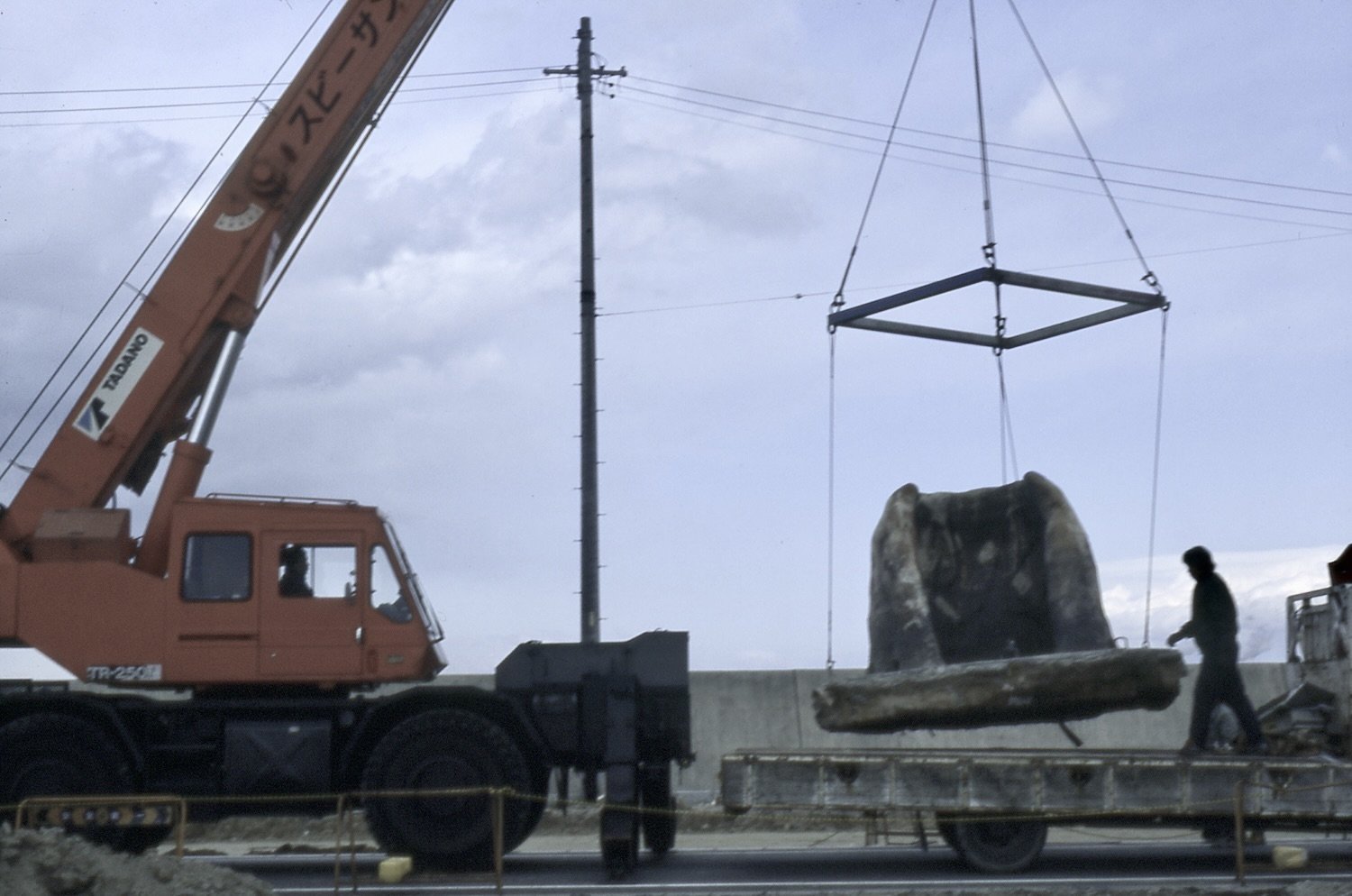
Moving to Permanent Site / 常設場所への移設
CLAY & FIRE / 土と火
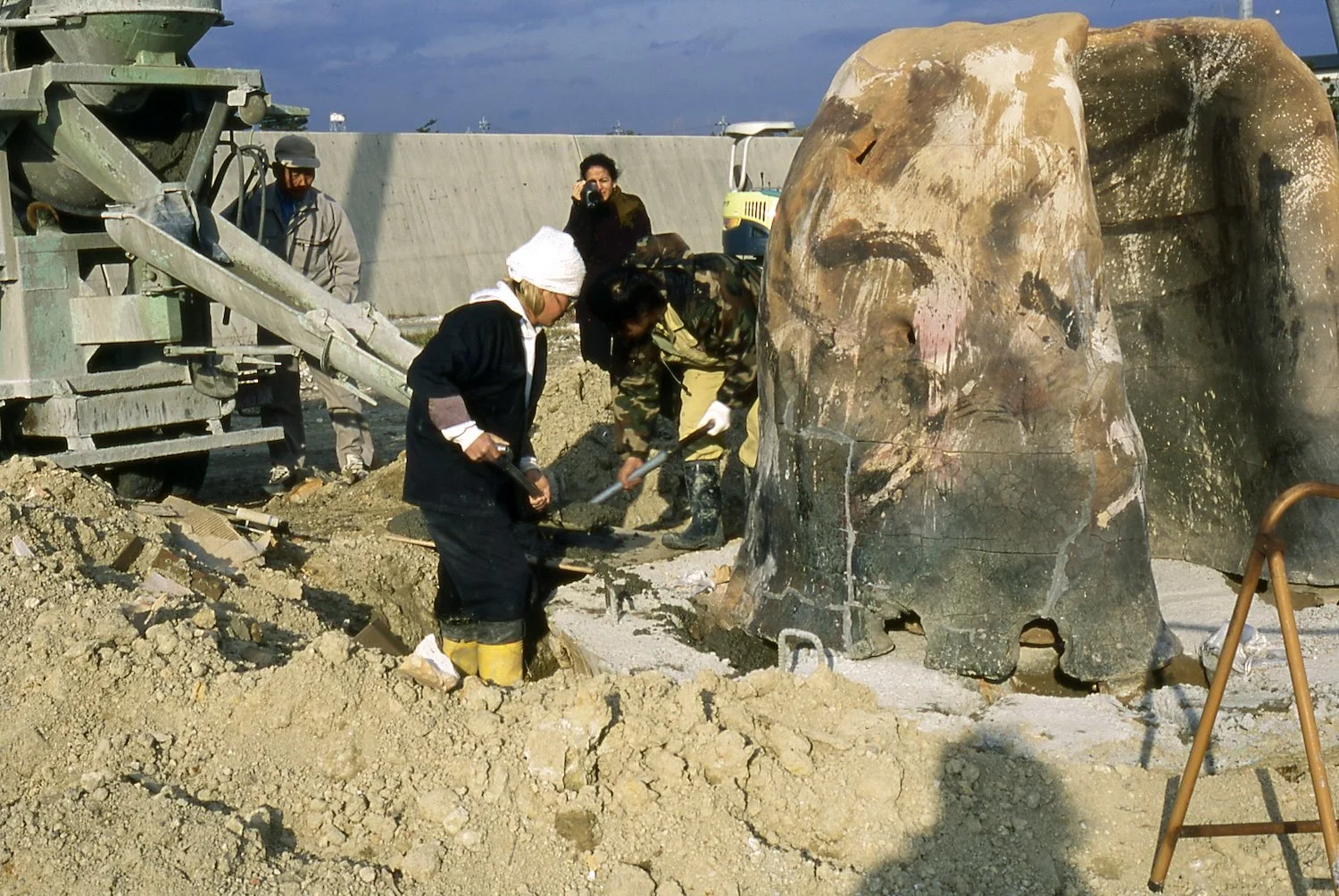
Plaza de Sora marks an early moment in EWS’s shift from studio-based ceramic practice toward working directly on site. Clay, fire, physical scale, public space, and human experience began to converge within a single work.
《空の広場》は、EWSがスタジオ中心の陶による制作から、現地で直接つくる実践へと展開していく初期の重要な作品です。土、火、身体的なスケール、公共空間、そして人の体験が、一つの作品の中で重なり始めました。
FROM LOSS TO LEARNING
喪失から学びへ
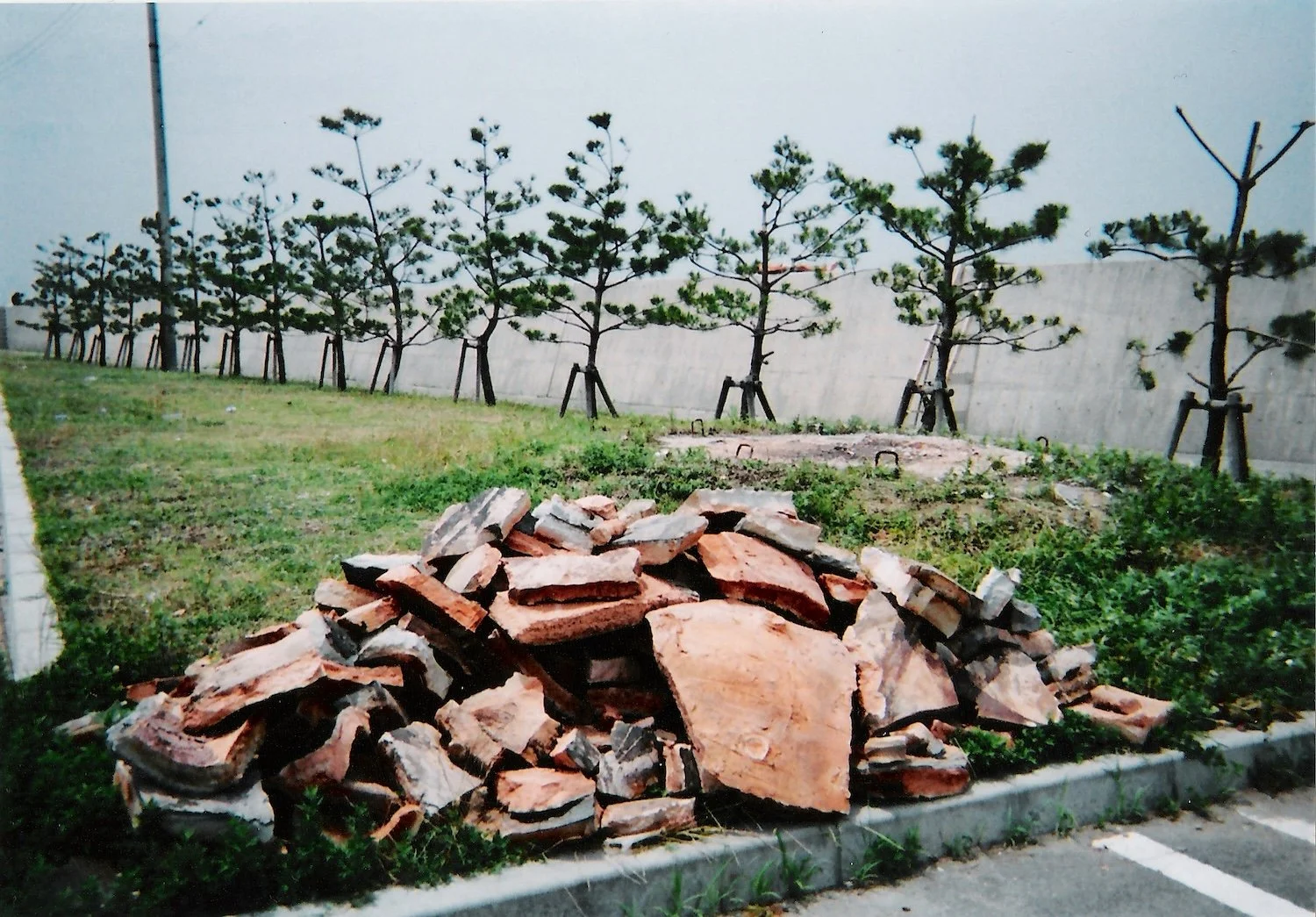
In 2004, following vandalism and a breakdown in communication surrounding the work, Plaza de Sora was removed.
Its loss became an important turning point for Elgueda Ward Studio. The experience brought into focus something that would become increasingly central to the studio’s later public work: creating a work in public space is not only about making and installing an object. Relationships, communication, participation, and a shared understanding of why a work belongs in a place are also part of the artistic process.
The experience did not end with the removal of Plaza de Sora. A new site was later made available, opening the way toward Plaza de Sora & Alba / 空と曙の広場.
2004年、《空の広場》は、作品へのいたずらや、その後のコミュニケーション不足などを経て撤去されました。
この喪失は、EWSのその後の公共空間での制作にとって重要な転機となりました。公共の場に作品をつくることは、作品そのものを制作・設置するだけではなく、人との関係、対話、参加、そして「なぜこの場所にこの作品があるのか」を共有していくことも、制作の一部であると考えるようになりました。
《空の広場》の撤去によって物語が終わったわけではありません。その後、新たな制作場所が生まれ、《Plaza de Sora & Alba / 空と曙の広場》へとつながっていきます。