


CAMINO
カミーノ
Rehabilitating a Century-Old Well Together
約100年前の井戸を共に再生する
LOCATION/場所
Yugakutei / ゆうがく邸
Kiinagashima, Mie Prefecture, Japan
三重県紀伊長島、日本
VIEW ON GOOGLE MAPS / Googleマップで見る →
REALIZATION & PUBLIC OPENING/制作・公開
Realization: December 20–31, 2010
Public opening: January 7, 2011
制作期間:2010年12月20日–31日
一般公開:2011年1月7日
STATUS/状況
Completed and donated to the site, 2011 — visible in historical imagery dated May 11, 2018; no longer visible in imagery dated March 18, 2021. Exact date and circumstances remain unconfirmed.
2011年完成・現地へ寄贈 — 2018年5月11日の過去画像では現地に確認できるが、2021年3月18日の画像では確認できない。正確な時期と経緯は未確認。
CATEGORY/分類
Earthworks / アースワーク
Socially Engaged Art / 社会参加型アート
Site-Specific Art / サイトスペシフィック・アート
FORM & MATERIALS/形式・素材
Earthwork surrounding an existing well; approximately 2.5 tons of cement-soil material, hand-operated water pump, LED lighting, internal sound tubes, viewing openings, and reused stone
既存井戸を囲むアースワーク、セメントを含む土素材約2.5トン、手動式井戸ポンプ、LED照明、音響チューブ、覗き穴、再利用した石
SCALE & DIMENSIONS/規模・寸法
135 × 145 × 200 cm
Well depth: approximately 8 m
井戸の深さ:約8m
PARTICIPANTS/参加者
30 participants
30名
PROJECT CONTEXT/実施形態
Commissioned project developed through the NPO A Piece of Cosmos Artist-in-Residence program; residency grant and project materials provided
NPO「A Piece of Cosmos」のアーティスト・イン・レジデンスを通して実施された委託プロジェクト。助成および制作材料を提供
DONATION/寄贈
Completed work donated to the site by Ximena Elgueda and Steven Ward
完成作品はヒメナ・エルゲダとスティーブン・ウォードより現地へ寄贈
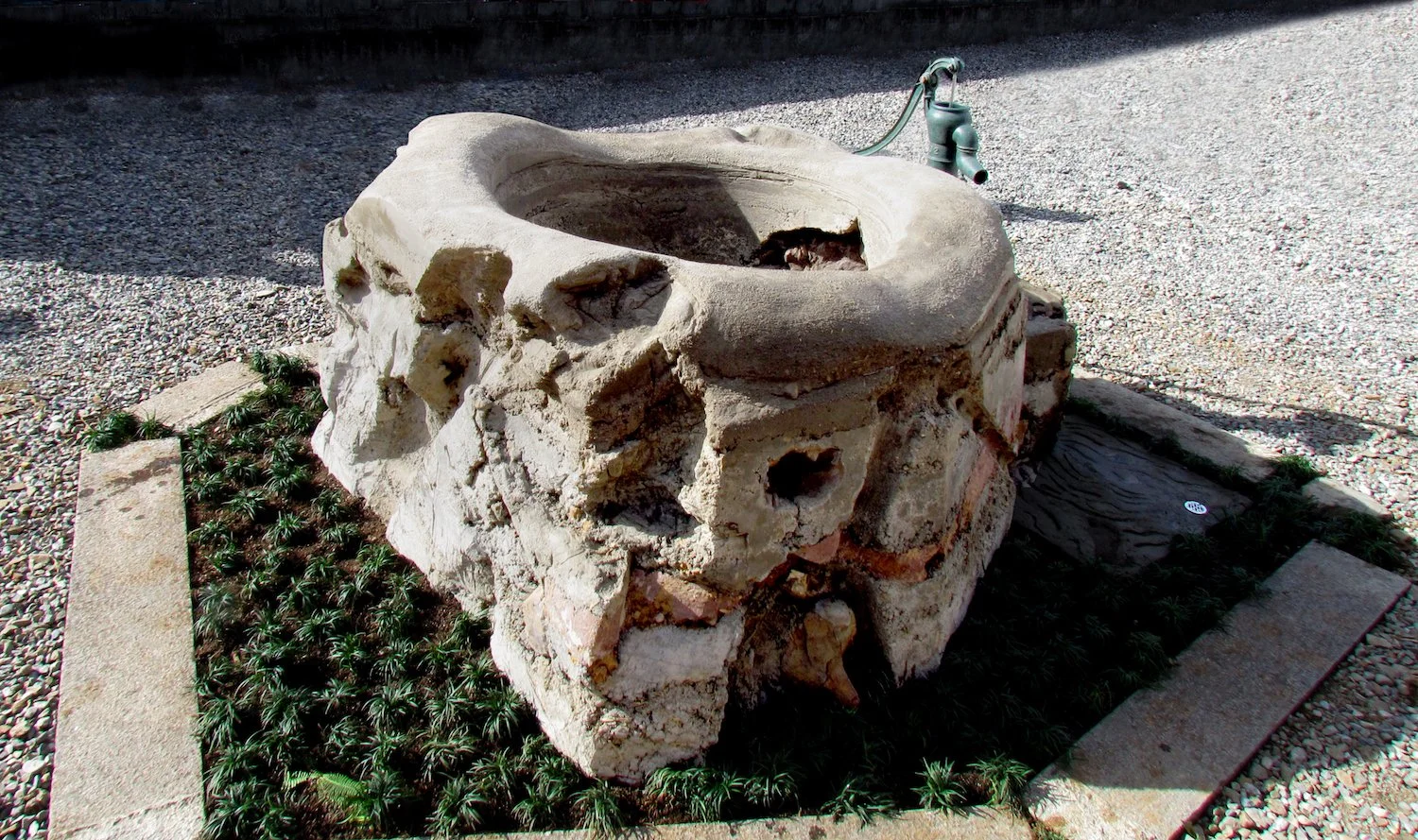
Created during an artist-in-residence program in Kiinagashima, CAMINO rehabilitated a covered, roughly century-old well through a collaborative process with 30 local participants. Its earthen form invited people to touch the surface, look and listen into the well, and draw water again with a hand-operated pump. By returning the well to use and visibility, the project reconnected an overlooked element of the site with everyday communal experience.
三重県紀伊長島でのアーティスト・イン・レジデンスを通して制作された《CAMINO》は、長く覆われていた約100年前の井戸を、地域の参加者30名とともに再生した作品です。土の形に触れ、井戸の中を覗き、水の音を聴き、手動ポンプで再び水をくみ上げることができました。使われなくなっていた井戸を再び見える存在として日常に戻すことで、場所に残る記憶と地域の体験を結び直しました。
LATER HISTORY / その後
Google Earth historical imagery shows CAMINO present at the site on May 11, 2018. In imagery dated March 18, 2021, the work is no longer visible. Ximena Elgueda and Steven Ward received no notice of any removal or relocation. The exact date and circumstances remain unconfirmed.
アーティストが確認したGoogle Earthの過去画像では、2018年5月11日時点で《CAMINO》が現地に残っていることが確認できます。一方、2021年3月18日の画像では作品を確認できません。ヒメナ・エルゲダとスティーブン・ウォードには、撤去または移設に関する連絡はなく、正確な時期と経緯は現在も未確認です。
DOCUMENTATION / 記録
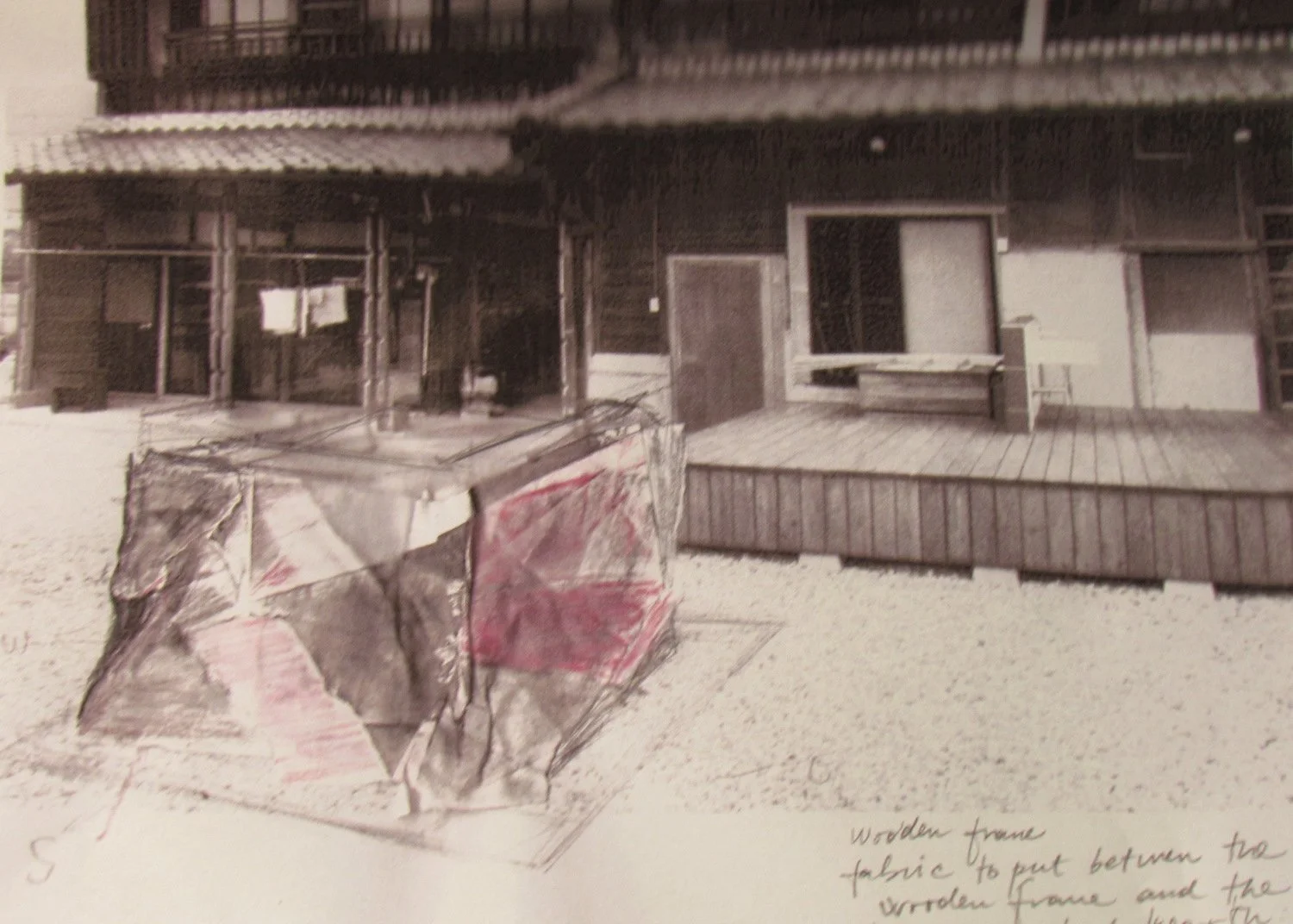
Concept Study / 構想スケッチ
Early drawings explore the relationship between form, material, and the surrounding site before construction begins. 制作に入る前のスケッチを通して、形、素材、周囲の場所との関係を探ります。
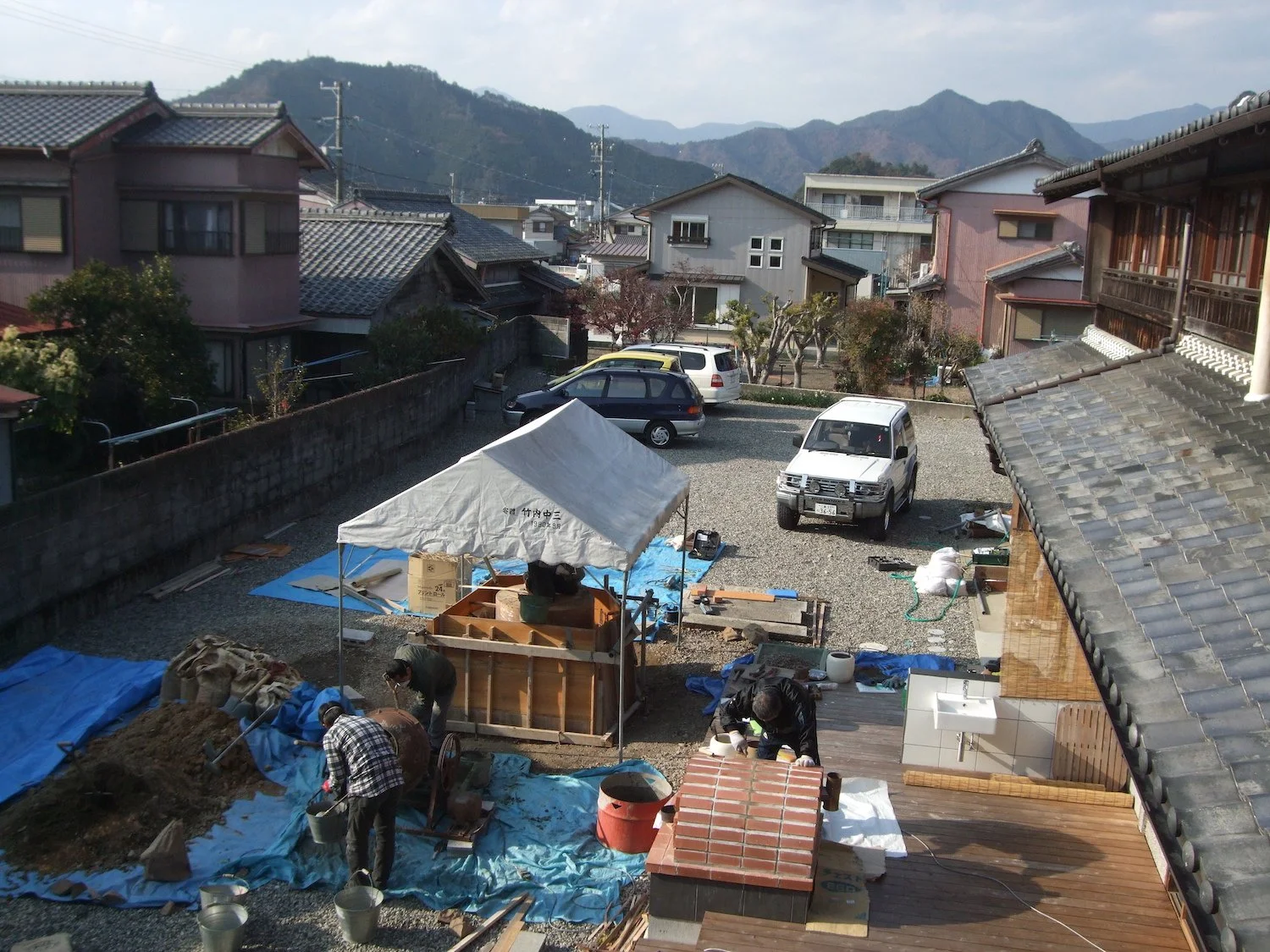
Site and Construction / 現地と制作
The work develops directly on site, responding to the scale, materials, and everyday environment of the surrounding neighborhood. 周囲のまちなみや敷地のスケール、素材、日常の環境に応答しながら、現地で制作を進めていきます。
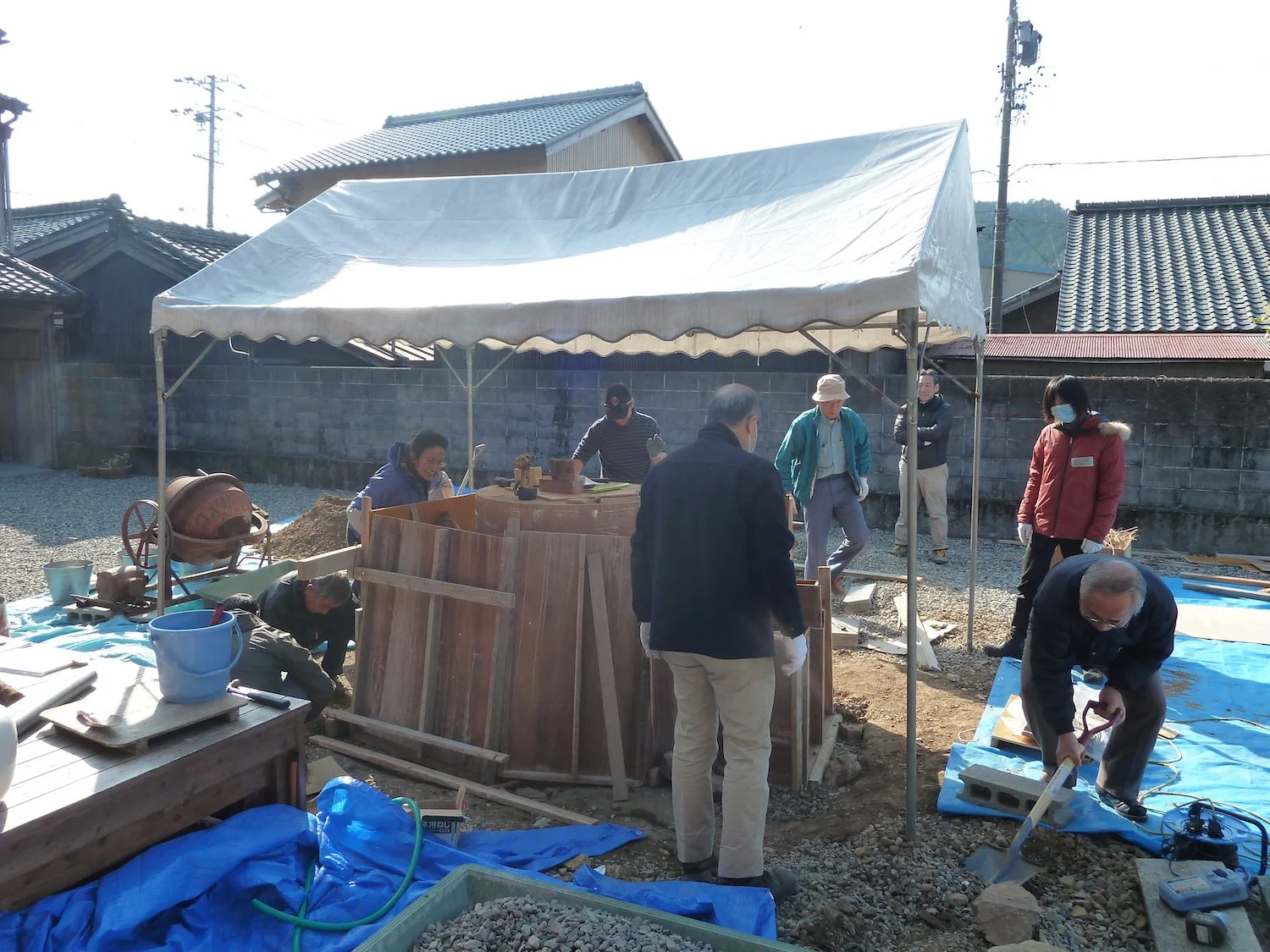
Building Together / 共同制作
The making process becomes a shared activity, bringing people together through hands-on work with materials and place. 素材と場所に直接関わる共同作業を通して、制作そのものが人々をつなぐ体験となります。
Earthwork in Place / 場所に根づくアースワーク
The completed form remains as part of the site, bringing together handmade material, function, and the character of the surrounding landscape. 完成した造形は場所の一部となり、手仕事による素材、機能、周囲の風景をひとつにつなぎます。